
Sound, Memory and Movement at Bolton Bus Station
We had the opportunity to spend time with In Transit, an immersive public art installation created by artist Stephy Shipley. Installed at Bolton Bus Station, the work transformed a busy transport hub into a place of shared memory, gently weaving together the voices of local people as part of the station’s own story. Shipley’s practice gently and evocatively transports us to other times and places; her visual, textual, and sonic pieces evoke a sense of elsewhere, inviting us to meditate on memory and place. In In Transit, that invitation was deeply felt: we were drawn into a collective reflection of longing and residual memory, haunted by the spoken and unspoken, offered fleeting glimpses of landscapes both familiar and unfamiliar, like stills from half-remembered films.
At the heart of the installation was sound. Sensors were positioned so that as travellers moved through the concourse, they triggered audio recordings: fragments of conversations, recollections and reflections from Bolton residents. Each clip was short, sometimes personal, sometimes collective, but always grounded in the lived experience of the community. As more people passed through, these memories built into a layered narrative, not linear, but overlapping, much like the comings and goings of a bus station itself. To achieve this, we installed PIR sensors connected to an Arduino microcontroller, which triggered recorded samples stored on a weatherproofed Raspberry Pi. Working in a live public space meant safety was paramount: all equipment had to be discreetly installed, securely housed, and carefully positioned so that the technology served the work without disrupting the everyday flow of the station.
What struck us most was the subtlety. The installation didn’t demand attention with visuals or spectacle. Instead, it worked with the existing rhythm of the station. Travellers who might not usually stop for art encountered it incidentally, in between buying a ticket or catching their bus. The result was a moment of engagement that didn’t interrupt daily routine, but instead slipped seamlessly into it.
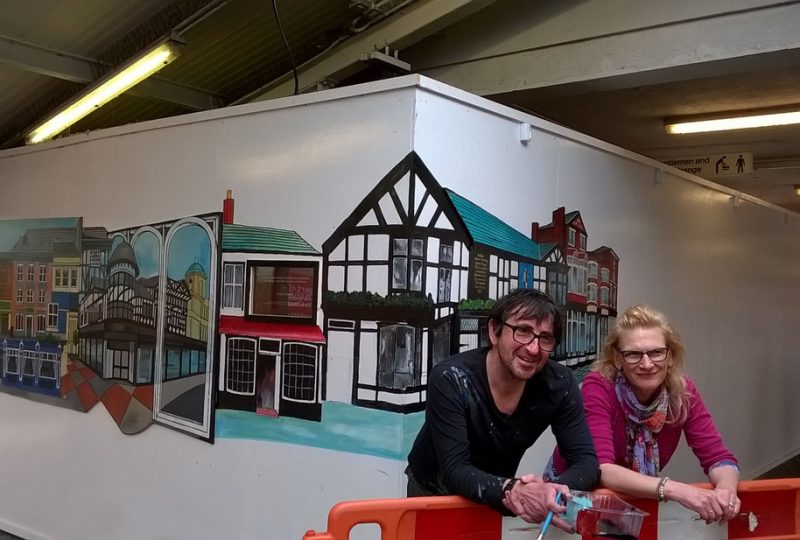
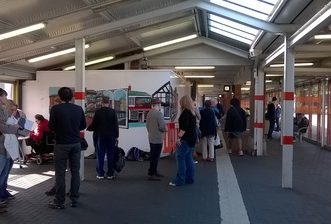
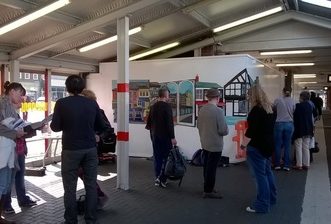
From a technical perspective, this required careful consideration. The equipment had to be robust and secure enough to withstand the demands of a public transport environment. It also had to remain discrete, present, but not obtrusive, so the focus stayed on the experience rather than the technology. In many ways, the success of In Transit came from this balance: reliable infrastructure underpinning an ephemeral, almost intangible layer of human connection.
As Bolton prepared for the relocation of the bus station, In Transit offered a kind of collective farewell. By capturing and replaying the memories of local people, the work documented not just the physical space but its role in the everyday lives of thousands of travellers. It reminded us that buildings and infrastructure are more than bricks and steel; they are vessels for stories. This approach reflects the ethos of HardaleAV: using technology to connect people with the spaces they inhabit, transforming everyday environments into immersive experiences that celebrate community and memory.